
Government must create a better enabling environment for the macadamia sector by addressing constraints on market access, tariffs, infrastructure, logistics, regulation, investment and skills. This was said by the Deputy Minister of Trade, Industry and Competition, Mr John Steenhuisen, during the Macadamias South Africa (SAMAC) MacDay on the Road 2026 event in Umhlanga, KwaZulu-Natal, today.
MacDay on the Road 2026 is a regional engagement programme through which SAMAC takes its industry platform closer to growers in key macadamia-producing areas. The KwaZulu-Natal event is one of four regional engagements taking place during September.
Steenhuisen said the international trading environment was becoming increasingly complex, with countries paying greater attention to food security, supply-chain resilience, standards and domestic economic interests.
“South African agricultural exporters cannot take anything for granted anymore. We need to deepen existing trade relationships while identifying new markets and opportunities for South African goods and services,” said Steenhuisen.
He said market diversification should remain a priority, requiring government and industry to identify growing demand, understand consumer needs, increase South Africa’s market share and address export barriers.
Steenhuisen highlighted efforts to expand agricultural market access, including work to open the Chinese market to South African cherries, as an example of the importance of government and industry cooperation on sanitary and phytosanitary requirements, market access and tariffs.
Turning to the macadamia sector, he said international demand for South African products exists, but price and tariff conditions affect competitiveness, with India being an example where tariff barriers remain a concern.
“We are not asking for special favours, we’re not asking for special treatment. I think what I hear the industry saying is that we want to be able to just compete on a fair and equal basis with our competitors around the world and then let our quality and our product speak for itself,” said Steenhuisen.
He committed to leveraging South Africa’s trade and cooperation relationships to pursue improved tariff conditions for South African products, while supporting existing growers and creating opportunities for new entrants and small-scale farmers.
“What government needs to do is look at ways in which we can create a much better enabling environment for you to unleash your talents, your abilities, your innovations in pursuit of growing the sector,” said Steenhuisen.
Infrastructure and logistics, particularly the efficiency of South Africa’s ports, were also identified as critical to export competitiveness. Steenhuisen said the public-private partnership at the Durban port presented an opportunity to improve the movement of goods and support export-oriented sectors.
Looking ahead, he identified five priorities for strengthening the partnership between government and the macadamia industry: productivity; quality; market access, diversification and tariffs; value addition; and inclusion and sustainability.
On productivity, Steenhuisen highlighted improved yields and farm-level efficiency through mechanisation, new breeding techniques, biological inputs and technologies such as drones. On quality, he stressed consistent quality and food safety to protect the reputation of South African macadamias internationally.
He said South Africa also needed to capture more value through processing, manufacturing, innovation, marketing and branding, including through products such as macadamia oil.
“The theme running through today is ultimately making better decisions for the future. Better decisions in the orchard, water, research and technology, processing, quality, markets and better decisions about how we build an agricultural economy in which more South Africans can participate,” said Steenhuisen.
Steenhuisen said the macadamia industry had an important role to play in South Africa’s agricultural and agro-processing future and reiterated the dtic’s commitment to working with the sector to address constraints and unlock opportunities.
“There’s an open door to address constraints, to unlock opportunities, but also to work together to strengthen the conditions that will make it easier for all of you to be able to contribute, grow, and most importantly, profit from these endeavours,” said Steenhuisen.
He encouraged growers, processors, researchers, industry organisations, investors and government to use MacDay to identify practical actions and partnerships to move the industry forward.
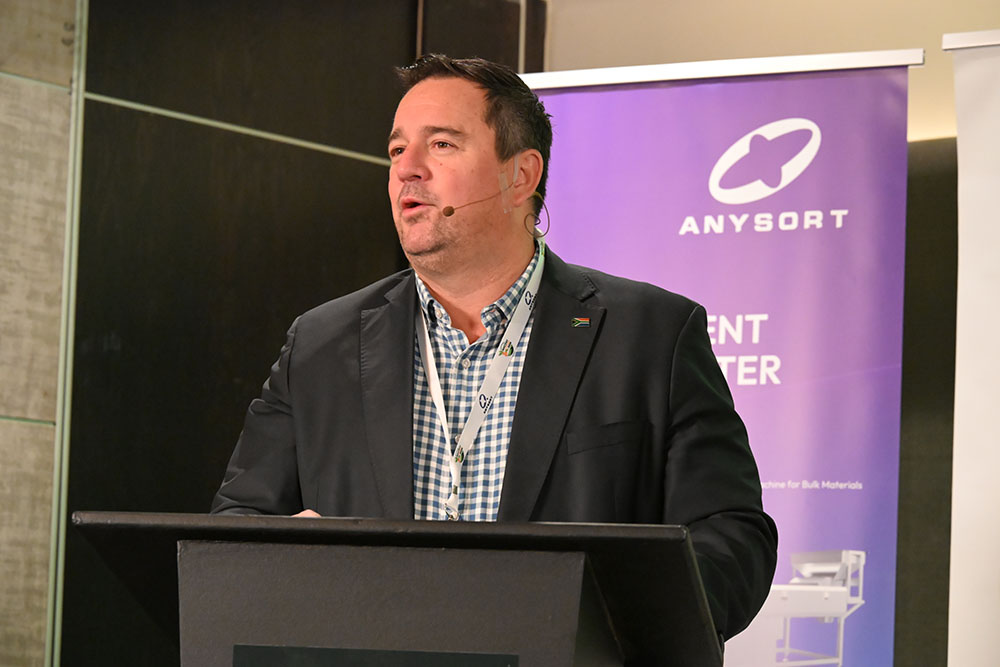
Deputy Minister of Trade, Industry and Competition, Mr John Steenhuisen, delivers the keynote address at the Macadamias South Africa (SAMAC) MacDay on the Road 2026 in Umhlanga, KwaZulu-Natal.
Media Enquiries:
Bongani Lukhele – Director: Media Relations
Tel: (012) 394 1643
Mobile: 079 5083 457
WhatsApp: 074 2998 512
E-mail: BLukhele@thedtic.gov.za
Issued by: The Department of Trade, Industry and Competition (the dtic)
X: @the_dtic
Facebook: https://www.facebook.com/thedti?mibextid=ZbWKwL
YouTube: https://www.youtube.com/@thedtic
Website: https://www.thedtic.gov.za/
Share this:
